

May 13, 2010
Sustainable Goat Production System - A Model
Red meat is considered bad for you. But this was not the case 50 years ago. There were tribes then, and still, who consume mainly meat and live normal healthy lives. Some eskimos eat only meat throughout their lives. Nomadic people used to consume only the meat and milk of the animals they herd.
Perhaps the problem lies with how we raise the animals. Here's the lipids content of a sample cut of 100 grams taken from the USDA nutrients database:
Beef - saturated fat: 9.75gms, omega 6: 2.56gms, omega 3: Nil, Cholesterol: 90 mg
Lamb - saturated fat: 11.76gms, omega 6: 2.08gms, omega 3: Nil, cholesterol: 74mg
Chicken - saturated fat 2.6gms, omega 6: 1.87gms, omega 3: 0.03gms, cholesterol: 64mg.
The chicken sample had an oddity, trans fat of 0.105gms. Wonder what are they feeding the chickens, recycled frying oil?
Compare the above with the goat meat produced from our farm:
Saturated Fats : 0.3gms, Omega 6: 140mg, Omega 3: 49.6mg, Cholesterol 51.
The non-existence of omega 3 in industrialised meats as per the samples from the USDA database is worrying for consumer health. The chicken had an omega 6 omega 3 ratio of 62:1. Our goat meat has a ratio of 3:1.
Read here why a low ratio is important for your health.
This is how we produce our goat meat. The goats are happy, the land is happy, the consumer is healthy.
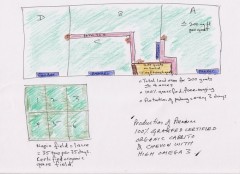
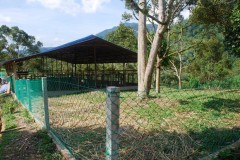
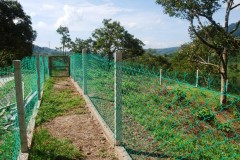
The goats are moved from field to field every 3 to 7 days. This reduces disease and intestinal worm problems.
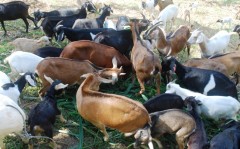
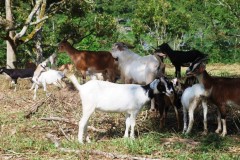
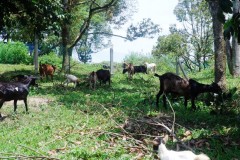
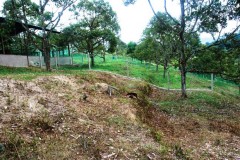
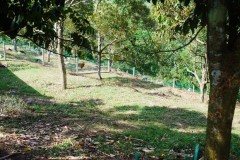
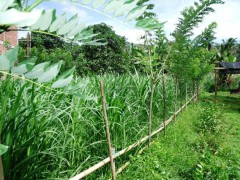
Grass is planted separately, harvested, and fed to the goats. This ensures better utilization of land and thereby reduce the demand for expanding land acreage.
An acre of land using normal grazing methods can raise a maximum 15 goats. In our case, we can raise 200 goats on an acre of land.
With less disease and better control on the quality of grass that the goats are eating, the net result is happy goats, healthier meat for the consumers and less impact on the environment.
We are the only producer of red meat that can guarantee an omega 6: omega 3 ratio of 4:1 or better (in the world!).
15:18 Posted in Goats | Permalink | Comments (1) | Tags: goat farming, sustainable goat farming, pasture management, omega 6 omega 3 ratio
May 10, 2010
Raising Free Range Chickens - Leave The Ammonia Behind!
Many readers write to us asking about diseases affecting their birds. However, many of these problems have to do with basic management, in particular the formation of ammonia(1) in their coops.
Initial signs of excessive ammonia include eye irritation and trachea and lung problems.
Subsequent to that, secondary infection sets in - mycoplasma for one, leading to chronic respiratory disease. Another common poultry problem is coryza resulting in a mad rush for antibiotics. Coryza, in the Malaysian context is often the result of exposure to ammonia which corrodes the mucous membrane allowing pathogens to gain entry into the body.
So the root cause is excessive ammonia and the solution to many diseases with symptoms like gasping, coryza, swollen eyes, etc is to manage ammonia production in your poultry system, rather than treat the end-result all the time, resulting in the abuse of antibiotics.
Ammonia production also leads to environmental issues - flies, smell, leachate, etc.
At our farm, we decided on a movable hoop house:

The hoop house design encourages air movement. The temperature difference within / outside the house can be as high as 2 degrees celcius.
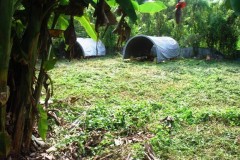
The hoop house is moved every 7 to 10 days. During dry spells, 10 days. During rainy seasons, every 7 days. Feeders and waterers are moved every 3 days. Don't let dung and discarded food accumulate to form ammonia.
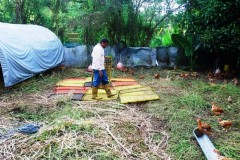
Lay down the bedding material.
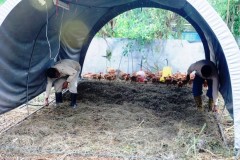
The house can be pulled by one man if the move is on flat land. If it needs to be lifted, then two men is required.
Note that the old floor have been covered with dried grass to start the in-situ composting. In no time, humus will be formed.
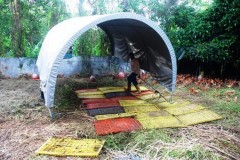
Each hoop house is designed to shelter 300 800grams chickens from the sun and rain.
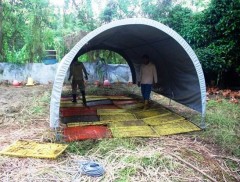
The house is moved in less than 15 mins. The chickens have clean fresh beds instantly. No necessity to remove litter and top up litter, etc resulting in labour and material costs savings.
DQ'S GOLDEN RULE : MOVE THE HOUSE, MOVE THE FEEDERS!! LEAVE THE AMMONIA BEHIND!!
Resulting in healthy, happy, nutritious chickens:
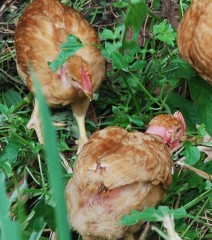
Birds are moved to the hoop house when they are 800 grams in size.
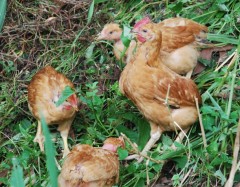
(1) The formation of ammonia is part of the natural process in the breakdown of organic material. Ammonium is poisonous and often wipe out a newly established aquarium of its fish. Industrial animal husbandry often raise animals in ammonia prone conditions - poultry, feedlotted cattle wading in their own dung, etc. Waste water from farms with animals often contain nitrites and nitrates which can also harm humans. At our farm all discharge is treated naturally and regularly tested for nitrite and nitrate levels as part of responsible farming.
17:13 Posted in Chickens | Permalink | Comments (1) | Tags: hoop house, free-range chickens, crd, poultry disease, free range poultry system, grassfed chickens