



Mar 09, 2012
Round Eyes, 'Long' Eyes
If you have a few thousand chickens running around, how do you know if some disease is starting?
In antibiotic-free poultry raising, it is extremely important that we catch problems fast. By the time the chicken shows obvious signs, the disease is well advanced and mortality can be high.
One of the fastest way we know of, especially if we are relying on workers, is to go like this first thing in the morning:
Farmer: How’s the chickens in Field Number 10?
Worker: OK, they are eating and running around.
Farmer: Are the eyes round?
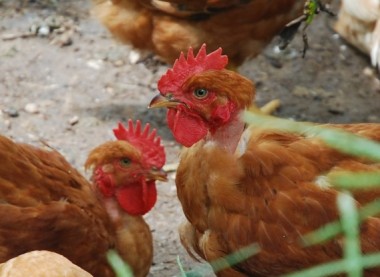
Round Eyes
Worker: Most have round eyes. Some have 'long' eyes.
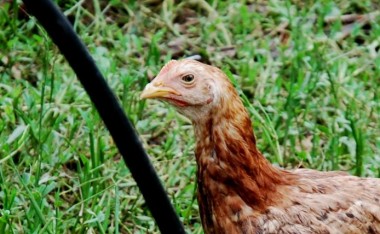
'Long' Eyes
Farmer: Out of 10 chickens, how many round, how many long?
Worker: 8 round, 2 long.

Round Eyes, 'Long' Eyes
20% of your chickens are showing signs of problems. You best head over to the field fast to see what’s the problem. First make sure the ‘long’ eyes is not due to physical eye problems.
Then, sacrifice a few chickens and examine the internal organs. Once you have narrowed down the possible causes, take the necessary action.
11:06 Posted in Chickens, Nature Farming, Sustainable Farming | Permalink | Comments (0) | Tags: free-range poultry, organic chicken farming, necropsy, poultry disease identification, chicken diseases
Mar 07, 2012
Snakes In The Farm - I
Was picking some chilies when we came across this small beauty.
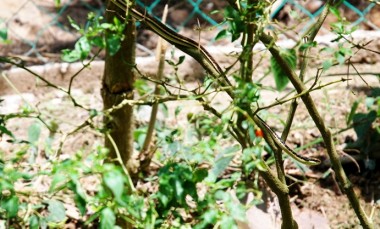
It is a Painted Bronzeback Dendrelaphis pictus, very common in the farm.
Eats frogs, lizards, snails and slugs. Can grow to 3 feet long.
Generally found up low lying trees and bushes, feeding on frogs and snails.
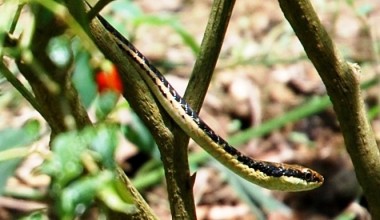
Not harmful to humans.
Every garden should have one or two to keep snails population down.
13:23 Posted in Blog | Permalink | Comments (0) | Tags: rat snakes, non vernomous snakes, dendrelaphis pictus, painted bronzeback, aboreal snakes
Mar 05, 2012
Flowering Enhancers - I
Some of the fruit trees shall be flowering soon. Time to make some flowering enhancers. Fermented flowering enhancers provide potassium and phosphorus, plus microbes to help the plants absorb the nutrients.
We use a large plastic container with a lid.
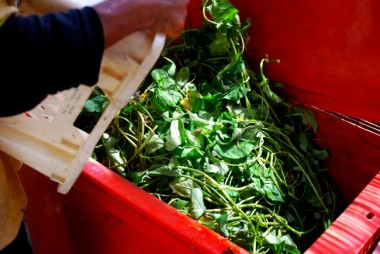
Add 10 kg of kangkung.
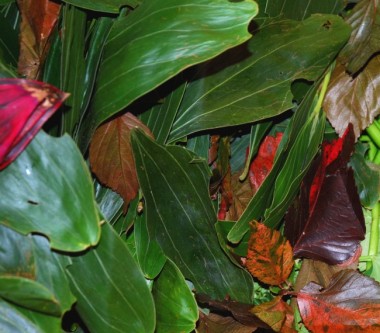
And 10 kg young acacia mangium leaves.
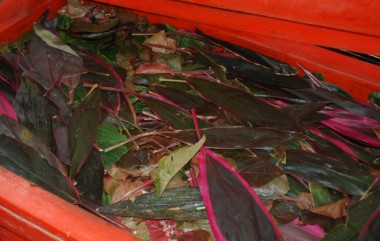
And 10 kg of red colored leaves.
Now add the potassium and phophorus:
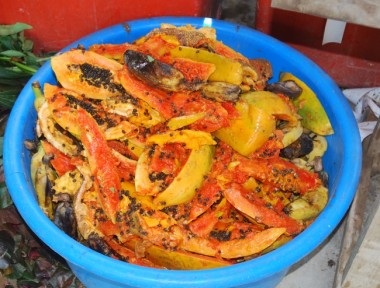
25 kg of papaya and 25 kg of bananas.
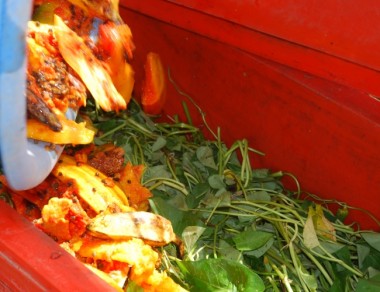
Put them together, leaves at the bottom.
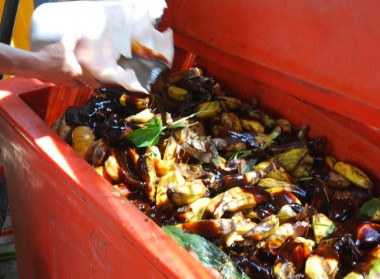
Add some molasses (agri grade, from Pertanian), about 20 kg will do.
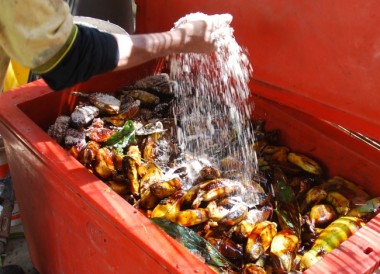
Sprinkle about 500gms quarry (granite) dust into the mix.
Cover with a plastic sheet, close the lid, and let ferment for 30 days.
(To be continued : Flowering Enhancers - II; How To Use)
14:03 Posted in Bio Nutrients, Sustainable Farming | Permalink | Comments (0) | Tags: bio nutrients, em, nature farming, sustainable farming