

Apr 06, 2012
VRE - Public Health Threat?
Vancomycin Resistant Enterococci (VRE) is often indicative of antibiotic abuse. Farms that use sub-therapeutic antibiotic continuously may have animals that harbor VRE.
VRE have been found in many countries in poultry meat, pork, beef, milk and cultured fish.
VRE poses a potential public health threat.
In 2005, our country reported a case of Community-Acquired Infection (CAI) of VRE. The report is here.
The point of infection is speculative in the report, but it does raise the red flag in so far as the possibility of CAI of VRE is concerned, in our country. This means that the possibility of infection have now moved out from the hospital environment to the community.
In the light of the possibility of community acquired infection of VRE, responsible farmers must do self-monitoring and self-testing to prevent selling meats that are infected with VRE.
All our poultry are tested to be free from Salmonella Enteritidis and VRE before processing. Here’s the test results on VRE in our recent samples sent to the lab :

Click on table for close-up
VRE infection is especially dangerous for those who are immune-compromised, e.g. cancer patients, those with heart problems, kidney problems, etc.
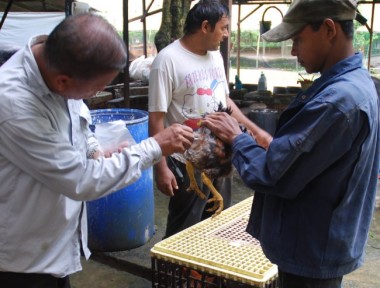
Farm manager Razaly taking a swab.
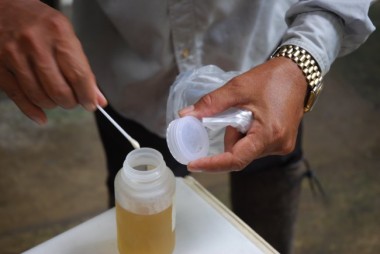
Preserving the samples in BP Water.
Testing samples from the farm is essential to ensure result integrity as samples from processed chickens may reflect cross contamination during handling.
16:52 Posted in Blog, Chickens | Permalink | Comments (0) | Tags: vre, se, salmonella enteritis, vancomycin resistant enterococci, antibiotic abuse
Apr 02, 2012
Living (And Farming) With Nature
The farm is a bird sanctuary of sorts. This statement seems to be contradictory at first sight, but our farm is full of birds of various kinds (about 50 different species at last count). We can farm and yet we can live in harmony with wildlife.
If you want to have birds in your farm, you must not allow your workers to kill any bird, not even one.
Birds living in close proximity of each other will know if one dies, even of different species. A farm like ours is like a huge giant aviary. The birds are regulars, or have made their homes at the farm. If you kill one, all the rest will know of the death. After a few deaths, they will start to leave.
And why kill them? Look at the ‘enhancement’ they contribute to the farm environment:
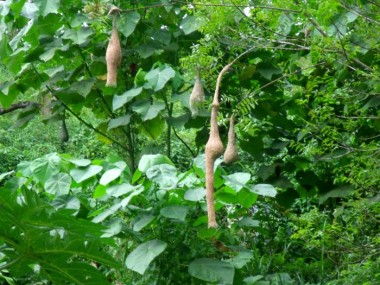
These are nests of weaver birds. They have made them hanging from a neem tree we planted in a chicken padang (field). At the background you can see one that’s green in color. The birds have quickly picked up the grass that we have cut to weave a nest. It will dry out gradually. These nests are the most effective against the many snakes that have made the farm their home too. It’s going to be tough for a regular snake to reach the entrance of the nest.
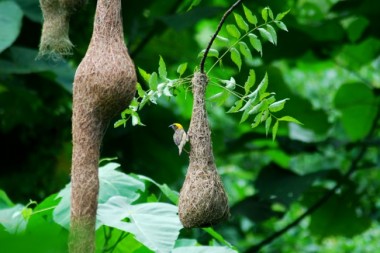
Experts say, birds will bring disease to a chicken farm. This has not been our experience (11 years now). All you need is the will to live with nature, and put to practice modern scientific knowledge about dieases. The costs involved is marginal. The benefits to bio-diversity and the ecology, immeasurable.
Spread the word; it can be done.
10:42 Posted in Blog, Nature Farming, Sustainable Farming | Permalink | Comments (0) | Tags: weaver birds, weaver bird nests, ploceus philippinus, burung tempua, baya weaver, co-existing with nature