



Apr 19, 2009
Rare Receipes - Durian Flowers
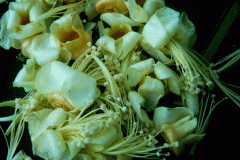 Durian flowers are delicious with a subtle taste and smell. It can be eaten raw as a salad with some sambal belacan. When eaten raw, the whole flower can be eaten - the petals, stamen, pistil and sepal. The sepal is sweet with a tinge of bitterness.
The flowers are delicious stir-fried with prawns, calamari, or shell fish , with chicken pieces, with tofu. When stir-frying, use only the petals, stamen and pistil. Do not use the sepal which turns acrid when heated.
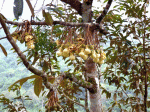
Make sure you get your flowers from an organic farm such as DQ Farm as during flowering season conventional farms will use a fair bit of weedicide and fungicide.
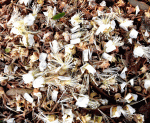

Parts of the durian flower. The sepal is sweet when eaten raw but turns acrid when cooked.
Simple Yet Delicious
Quickly immersed flowers in boiling water, remove and drain. When cool, serve with sambal belacan.
Stir-fried with Calamari - spicy
Blend onions, garlic and fresh red chillies. Stir-fry in some oil until fragrant. Add prawns or calamari, salt and some sugar to taste. If desired some belacan can be added. Add flowers for a few quick stirs, and serve. Yummy.
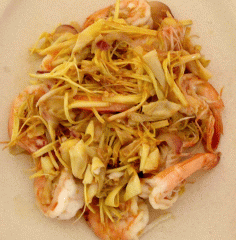 Stir-fried with Prawns
Chop onions and garlic. Stir-fry until fragrant. Add prawns, salt and sugar. Add flowers, stir fry quickly, serve. For those prefering a bit of spiciness, add chopped chilli padi as garnish.
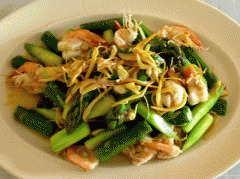
Stir-fried asparagus with prawns, oyster sauce and of course, durian flowers.
20:53 Posted in Slow Food / Rare Receipes | Permalink | Comments (0) | Tags: durian, flowers, slow food, rare receipes
Apr 17, 2009
Rare Receipes - Lontong Daun Pisang Sematu
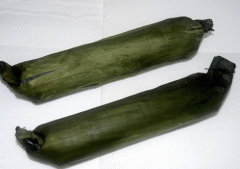
'LONTONG' done traditionally is rarely found nowadays; at least in the cities. Some people are using plastic bags and green coloring! Before the traditional way is lost forever, here's the method:
Use only leaves from the banana plant called 'sematu' or 'batu' or 'nipah'. Using leaves from this banana cultivar will impart a deep green color to the rice and a wonderful fragrance. Leaves from other banana cultivars can be used but the color will be lacking, and the aroma is not as fragrant. Try to get leaves from an organic farm as fungicides are used extensively in banana cultivation especially if they are using tissue-cultured clones.
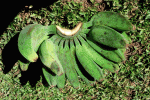
The 'sematu' fruit is mottled, untidy and is 3-sided and angled.
The 'sematu' banana plant is tall, at our farm it reaches to 20 feet high. We grow the plant to provide shade for the chickens in the fields. The fruit tastes better fried or cooked and is seldom eaten raw.

The 'heart' or male flower of the 'sematu' at our farm is big, easily 18 inches long.
Use 2 or 3 layers of the leaves. Use a narrow cylinder as a mould and roll the leaves. Make sure the overlap errs on the generous side so that the expanding rice will not cause the ends of the leaves to open up. Remove the mould. Close one end of the rolled leaves with tooth picks or if you intend to keep the lontong for a few days, stitch it up.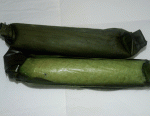 This is to prevent the rice during storage, from going moldy by exposure to air.
The 'sematu' leaf gives a rich green color to the cooked rice which should be glutinous-like after cooking and no longer seperates into individual grains.
Fill the rolled leaves to 30% to 40% of its length with rice. You may have to try out one cylinder first as different rice have different expansion rates. You want the rice to expand and get 'compressed' within the rolled leaves. Secure the other end.
Put the rolls into a stainless steel pot and boil for 3 to 4 hours. Do not use an aluminum pot as the greenish color will be faint due to some reaction with the leached aluminum. Take out the lontong and let drain. After it has cooled, serve. Kept in a cool dry place, it can keep for 3 days. Kept in the refrigerator it can keep for up to 10 days.
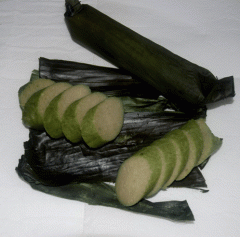
Serve with curries, with rendang, or with Chinese stews, for example those with chicken or goat pieces stewed with black soya sauce, mushrooms, garlic and herbs. Another interesting dish is lontong with grated coconut and gula melaka or palm sugar.
22:27 Posted in Slow Food / Rare Receipes | Permalink | Comments (0) | Tags: slow food, lontong, pisang sematu, pisang batu, pisang nipah
Apr 13, 2009
Farm Visit - Head of Veterinary Services and Country Farm
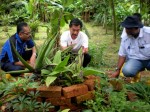
Datuk Dr. Azahar Idris, the Director of Veterinary Services for Pahang dropped by on a surprise visit. Here he is shown how composted chicken litter can be used as a planting medium and as fertiliser.
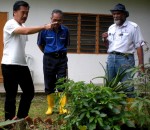
Nothing is wasted in DQ Farm, carcasses, litter, etc are all recycled to produce healthy vegetables, fruits and herbs.
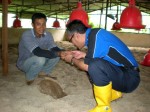
Sorry Datuk, no exceptions! All visitors have to smell this 7 year old litter.
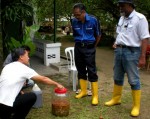
And from the herb garden, a fermented mix as a preventive and tonic for the chickens.
Yesterday, April 12, Selina Gan, MD of Country Farm came visiting with her family and senior staff.

Overview of a sustainable farm - 1 + 1 = 10!
 Inspecting the herb garden
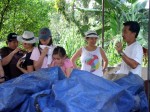
They were expecting some foul smell from the carcasses, dung, and stuff.

Taking back bags of charcoal to fertilise their home gardens, and to bury some carbon!
20:53 Posted in Visitors | Permalink | Comments (0) | Tags: veterinary services, country farm, farm visits